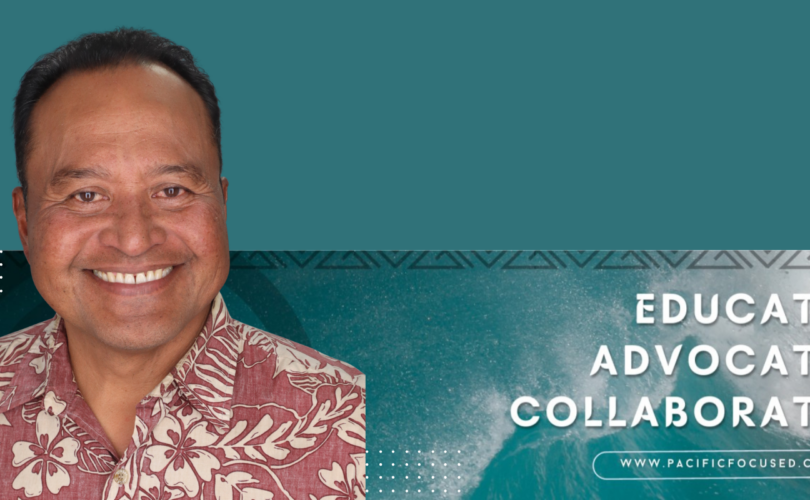
I am super grateful to live long enough to celebrate my 60th birthday with my family and in the company of some of my most amazingly inspiring buddies who flew in from Hawaii, Arkansas, Arizona, and local friends.
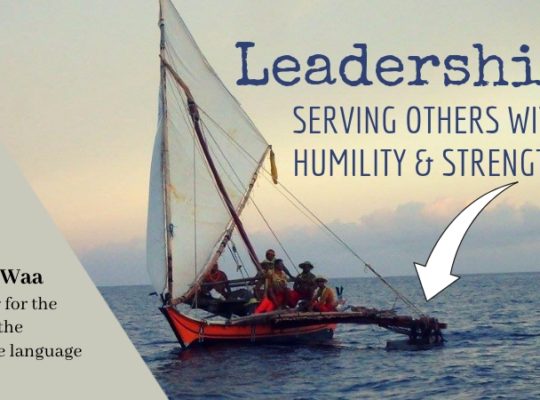
Growing up in the outer islands of Chuuk where the traditional celestial wayfinding is still practiced to this day still leaves me with a foundation of awe and gratitude. I can say that out there, we don’t measure distance by miles, but by the stars we follow, the piloo (companions) on our journey, the stories we hold deep in our hearts, the kinship we form through clan lineage, the values we live by, and the ancestral spirits that inspire us forward. As I reach the milestone of my 60th birthday, I find myself standing on the teman waa (outrigger) of my own life’s canoe, looking back at the wake I’ve left behind and forward toward the horizon of the “afternoon” of my life.
Reaching that 60th birthday makes me reflect on the insignificance of numbers. Here in the US I now belong in the senior citizen class with movie discounts and to play golf with the seniors. In our Chuukese tradition, it marks a transition into the role of mwan repi—a person of wisdom. But as I reflect on the journey from the shores of Houk to the halls of academia in Guam, New York, California and Hawaiʻi, the primary emotion filling my sails isn’t a sense of “arrival” at a place of repi-ness. Rather, it is profound, humbling gratitude.
Gratitude for the Roots
I am first and foremost a proud son of the Northwest region of Chuuk State in the Federated States of Micronesia (FSM). My foundation was built on the sands of Tamatam, Onoun, and Houk belonging to the Ainang Pwaraka (Houpelai) and Alengeitaw (Achaw) as well as iomeronikorh connection to Mongonifarh. I am deeply grateful for the elders—especially the late Urupwulo—the role model who raised me with the simple, rigorous values of a true mwaan repi. They taught me that leadership is not about standing above others, but about sitting in humble communion with others, ensuring the canoe reaches its destination together with our piloo. My 60 years have been an attempt to honor that indigenous wisdom in a modern world particularly in the U.S where the culture of individualism, nationalism, nativism are at their worst manifestation through its current government.
Gratitude for the “Way of Proceeding”
For ten years of my life after college, I walked the path of Jesuit formation with the idealistic belief that I was meant to be a Jesuit priest. While my life’s vocation eventually led me to marriage and fatherhood rather than the priesthood, the Ignatian Spirituality of being a “man for and with others” remains my compass personally and professionally.
I am grateful for the “magis”—the drive to do more for the sake of the greater good. Whether through the various projects I am blessed to lead or co-lead to support the success of Pacific Islanders or my work in international education at SJSU, my 60 years have taught me that service is the only currency that truly increases in value over time. I am grateful to have a 25-year career in higher education in which the pursuit of service and ministry continues to be at the forefront of my leadership strategies and choices.
Gratitude for the Journey of Education
As a product of the Chuuk public school system, I know what it means to struggle for an education. I am grateful for the challenges that forced me to work harder and for the opportunities that took me from Houk Elementary School, WeiPat Junior High School and Chuuk High School to undergraduate studies at University of Guam, philosophy studies at Fordham University, theology studies at the Jesuit School of Theology at Berkeley, educational administration studies at University of San Francisco, and eventually to my doctorate at UH Mānoa.
Seeing the next generation of Micronesian students find their voice through the Dr. Joakim Peter Memorial Scholarship, the Navigating Success movement, the WAO Youth Summit and other youth empowerment initiatives is perhaps my greatest professional joy. To see our youth realize they are not “underrepresented” but are actually powerfully resourced with cultural wisdom is a gift I don’t take for granted. I wish I had realized that strength early on in my academic and professional career when I struggled with imposter syndrome or inferiority complex among American students even when I was very successful.
Now, I just want to tell every Micronesian youth who have grown up in the shadows of decades of colonialism how powerful they are. That we are descendants of some of the most intelligent, courageous, resilient, powerful, respectful, humble, and fearless people in the world. Prior to the uninvited arrival of colonizers from Portugal, Spain, Germany, Japan, America, our ancestors were grounded in community, practiced deep spirituality borned out of respect for nature, masterfully navigated the ocean with just their deep knowledge of stars, currents, seasons, and the creatures of the ocean. That we must not displace these indigenous wisdom and our strength with the mediocrity of foreign forces.
Gratitude for My Family: The True North
To my partner, Desha, and our children Naihangiluk and Rahutow: you are the anchors that keep me steady and the wind that pushes me forward. While my work takes me across the ocean and through complex social issues, coming home to you is always the ultimate reminder of what matters. A life of advocacy is only sustainable when it is rooted in love. You know that I do and will always love you way more than I can ever express in words.
I am deeply grateful for my extended family…those who are related to me by blood and by our common ties of service.
I am grateful to those in my circle of influence who have gifted me with their love, inspiration and abiding friendship. The small but powerful “Micronesian Pirates” from my Ed.D cohort who continue to inspire me with their strength of character and wisdom. The Shakava Board for the laughter and good nature even as we serve our COFA community in our various roles and responsibilities.
Looking Ahead
At sixty, the “winds of change” feel different. They are softer, more intentional. I am no longer in a rush to conquer the world; I am simply honored to be a part of building a better world for me and future generations of humanity.
I want to serve more compassionately, lay down stepping stones for future generations to walk purposefully, steward opportunities for colleagues to serve students honorably, and at times challenge systemic discrimination for a more equitable and peaceful world.
I want to spend this next decade continuing to bridge the gap between our islands and the diaspora, ensuring that our people don’t just survive in new lands, but thrive. I want to continue being a Remetau—a person of the deep ocean—navigating the complexities of equity, education, and identity with a heart full of thanks.
Killisou Chapur. Thank you to everyone who has shared a seat in their canoe and those who have climbed into my canoe to help me paddle forward these last sixty years of my life. The voyage continues.